Neuro-Symbolic AI: The Smart Technology That Could Transform the Future of Indian Education
Imagine having a teacher who never gets tired, explains difficult concepts in different ways till you develop knowledge about them, remembers your strengths and weaknesses, and always tells you why an answer is correct rather than simply giving it. Sounds like science fiction? Thanks to Neuro-Symbolic AI, this vision is slowly becoming a reality.
From voice assistants and chatbots to personalized recommendations on streaming platforms, AI is everywhere and already becoming part of our daily lives.
However, today’s AI isn’t perfect; sometimes it can deliver wrong information, misunderstand questions, or generate answers without explaining its reasoning. That’s where Neuro-symbolic AI emerged as a new initiative that combines machine learning with logical reasoning to make AI smarter, more reliable, and easier to trust.
To understand Neuro-Symbolic AI, let's first look at the two technologies it combines.
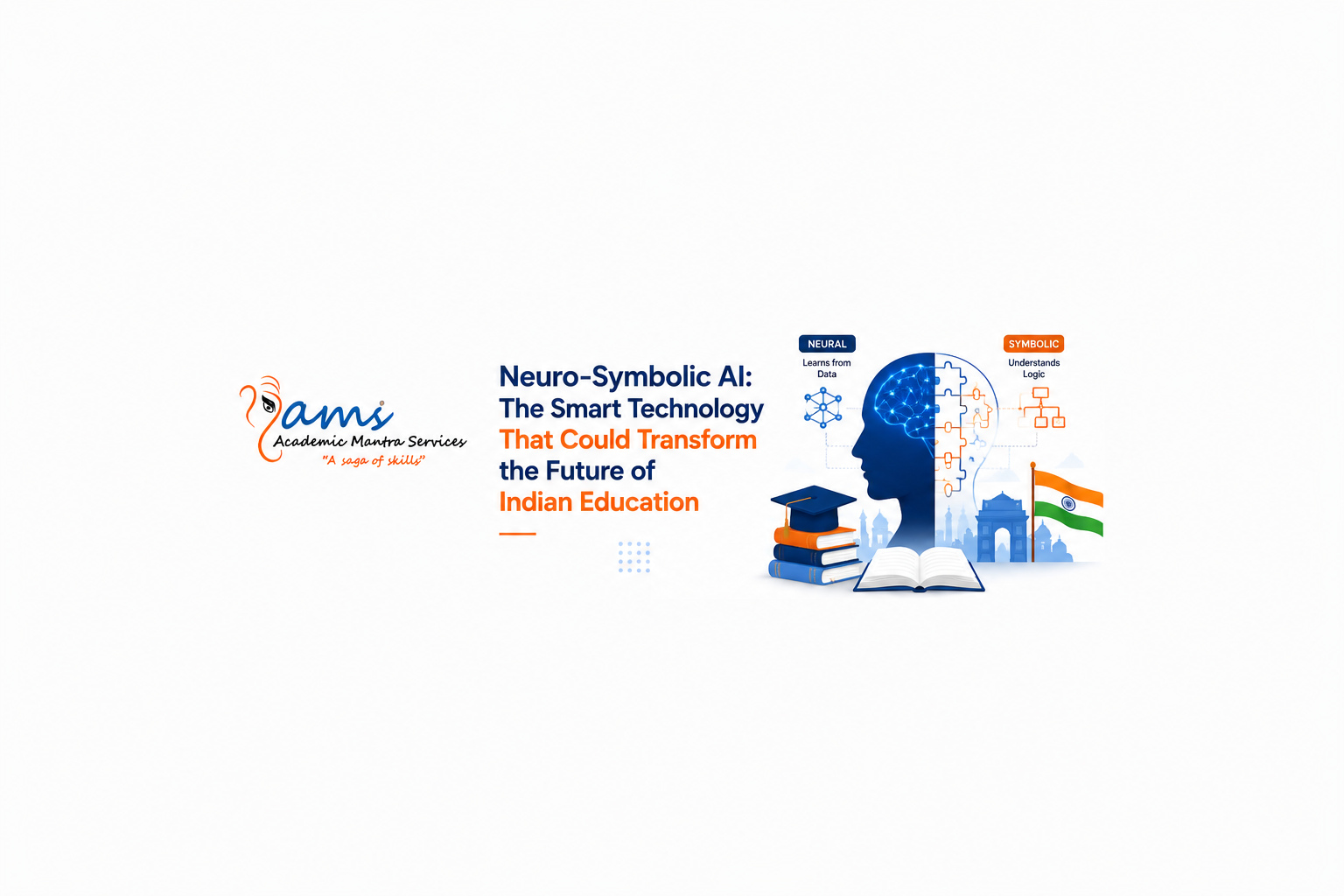
The first is Neural AI, which powers the latest AI tools like ChatGPT, Google Translate, image recognition systems, and recommendation engines. Neural AI learns by analyzing huge amounts of data and recognizes patterns. While it is excellent at recognizing images, understanding speech, and producing text, it doesn’t always understand why something is correct. As a result, sometimes it can produce incorrect or misleading information.
The second is Symbolic AI, one of the original forms of artificial intelligence. Rather than learning from data, Symbolic AI follows predefined rules, facts, and logical reasoning. It is very good at solving structured problems and explaining its decisions but struggles when dealing with large, complex, or constantly changing data.
Neuro-Symbolic AI merges the strengths of both. Additionally, it enables AI to learn from experience like Neural AI, even though it reasons logically like Symbolic AI. This combination creates systems that are not only intelligent but also transparent, explainable, and more dependable.
Over the last few years, artificial intelligence has attained remarkable progress. It can write articles, generate images, summarize documents, and answer complex questions within seconds.
Current AI models depend more on probability rather than genuine understanding. They predict the most likely answer based on patterns in data, which means they sometimes generate incorrect facts with complete confidence—a mechanism commonly called AI hallucination.
This limitation emerges as a stressful condition in education, healthcare, law, finance, and scientific research, where even a small mistake can have significant consequences.
Neuro-Symbolic AI aims to solve this problem by combining statistical learning with logical reasoning. Instead of simply predicting answers, it can verify information using structured knowledge and logical rules, making its responses more accurate and trustworthy.
Suppose two students are studying mathematics during which one of whom understands concepts quickly but struggles with word problems. The other needs more time to grasp basic formulas but learns effectively with the help of visual examples.
So, Traditional classrooms teach both students in the same way, but Neuro-Symbolic AI could change that.
Because it combines learning with reasoning, future AI-supported educational systems could evaluate each student's progress, identify learning gaps, and suggest personalized lessons, practice questions, and explanations. Moreover, instead of providing the same content to everyone, the AI could adjust its teaching style based on each learner's needs.
This personalized approach has the potential to enhance learning outcomes by making education more engaging and inclusive.
As we know, India has one of the world's largest education systems, serving millions of students from different linguistic, cultural, and socio-economic backgrounds. Providing high-quality, personalized education to such a large population remains a major challenge.
Neuro-Symbolic AI provides the best solution because it caters to the needs of learners while maintaining logical accuracy. It also aligns closely with the vision of India's National Education Policy (NEP) 2020, which motivates technology-enabled learning, critical thinking, multilingual education, and personalized teaching methods.
Rather than replacing teachers, experts believe this technology could become an intelligent classroom assistant that supports both educators and students.
India is home to hundreds of languages and dialects, making education both rich and challenging. Many students understand concepts better when they are explained in their native language, but finding quality educational content in every regional language is difficult.
Neuro-Symbolic AI has the potential to make learning more inclusive by combining language understanding with logical reasoning. Instead of simply translating text word for word, future AI systems could explain concepts in a way that matches the student's language, cultural background, and level of understanding. This could help students from rural and underserved areas receive the same quality of education as those in urban schools.