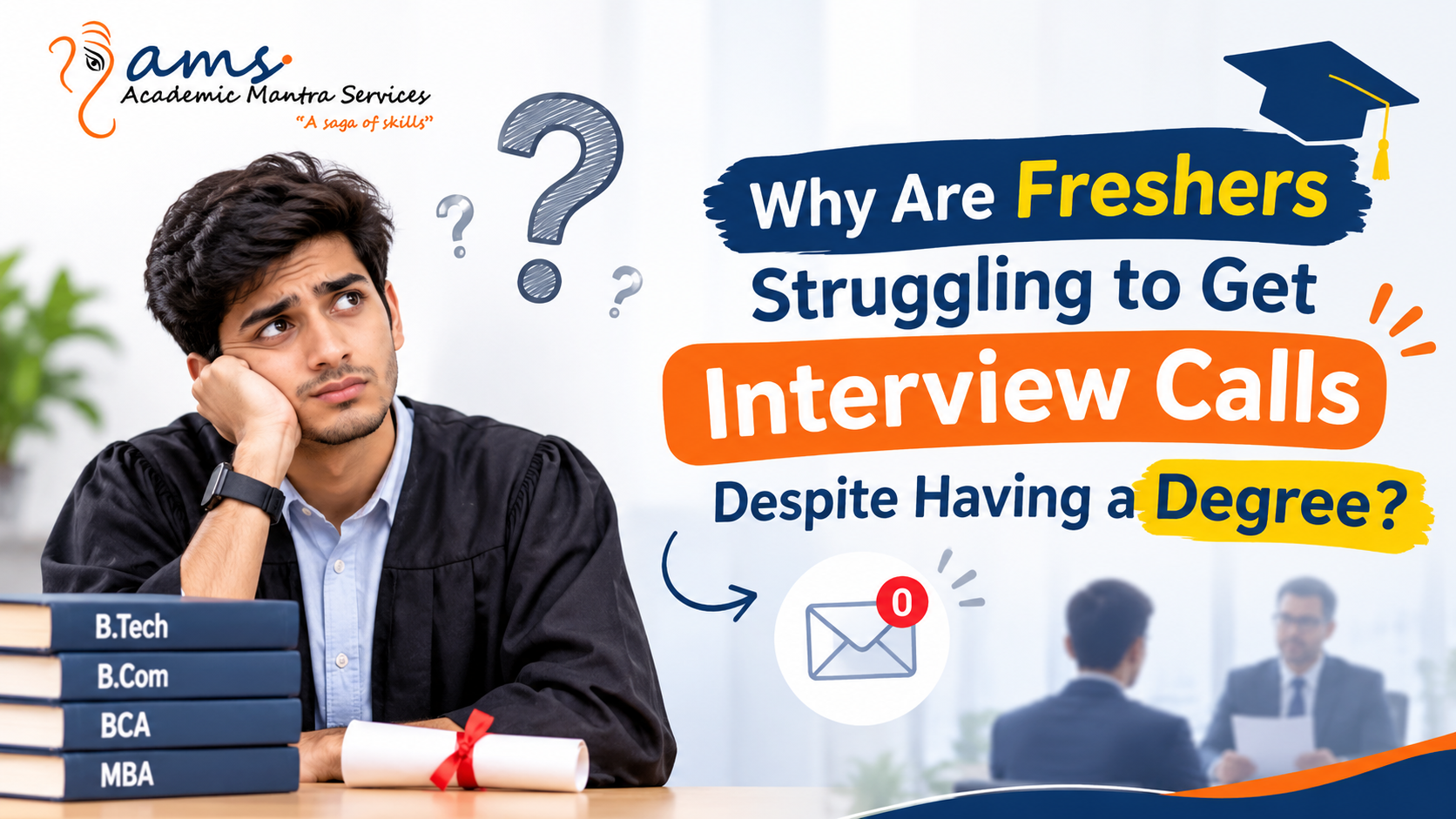
A degree is supposed to open the door to employment. Yet many graduates spend weeks applying for jobs without receiving a single interview invitation. They meet the stated eligibility criteria, have completed their coursework and may even hold additional certificates. Still, their application received little response.
The problem is not always a lack of qualifications. A fresher enters a recruitment process where academic results, practical ability, job requirements and the employer’s immediate needs can all influence selection. Understanding how these factors interact helps explain why some applications progress while others do not.
What Current Hiring Research Reveals about Graduate Employability
India’s entry-level job market is a little more complicated than the popular advice that “degrees don't matter, just have skills."
Take a look at findings, which collects insights from over 10,000 students, 80+ companies, and 100+ colleges and recruiters. It found a huge reality check:68% of fresh graduates believe they are ready to work from Day 1, but only 9% of employers agree. Plus, the report showed that only 21% of companies have completely stopped looking at academic scores when hiring.
For freshers, this disconnect highlights two hard truths:
- Doing the work vs knowing the theory: Companies don’t just want someone who can read the textbook concepts, they are looking for people who actually know how to use that knowledge to get things done in a real world environment.
- Grades still act as gatekeeper: Even though everyone talks about “skill-first hiring,” most companies still use academic marks as a quick way to filter through piles of resumes.
Why Applications Can Be Rejected Before an Interview
Recruiters may receive dozens or even hundreds of applications for a single vacancy, so they cannot always give every resume the same amount of attention. They usually look for candidates who meet the job requirements and show that they can handle the responsibilities. If a resume does not clearly explain why the applicant is suitable, the recruiter may overlook it, even when the candidate has the right knowledge.
For example, a commerce graduate applying for an accounts assistant role might mention their degree, computer skills and communication abilities. Another candidate might also describe a college project involving spreadsheets, financial calculations or accounting software. This gives the recruiter a clearer idea of how the candidate could use their knowledge at work.
The same applies to other fields. A marketing graduate could explain how they analysed a campaign, while a computer science graduate could describe a programme they developed and the problems they solved. Practical examples make it easier for employers to understand a candidate’s abilities.
Still, not every rejection means the applicant is unqualified. Sometimes a company receives more suitable applications than it has interview slots. Hiring plans can change, vacancies may be put on hold, and decisions can also be influenced by individual judgement. Indeed’s 2026 Hiring Confidence Index, reported by India Today, found that 29% of surveyed Indian job seekers identified receiving no response after applying as their biggest job-search frustration. For freshers, this means that a lack of response does not always reveal the reason behind a hiring decision.
The Gap Between College Learning and Workplace Expectations
College gives students the knowledge they need to start a career, but using that knowledge at work can be a different experience. Employers may expect new graduates to understand instructions, work with relevant tools, solve problems and explain their decisions rather than simply remember what they studied.
For example, a student may understand data analysis concepts but struggle to draw useful conclusions from a spreadsheet. A marketing graduate may know the basics of SEO but have little experience analysing website performance. Similarly, a fresher applying for a customer service role may communicate well with friends but find it difficult to handle an unhappy customer professionally.
This does not mean graduates are unprepared for every job or that they must gain years of experience before applying. Many employers hire freshers because they are willing to learn and develop on the job. However, showing some understanding of the actual work can help candidates make a stronger impression.
College projects, internships, volunteering and independent assignments can all provide useful examples. What matters is being able to explain what you did, what you learned and how the experience relates to the position. Another certificate may add value, but it is more convincing when you can also demonstrate what you know.
How Freshers Can Make Their Job Applications More Effective
Sending more applications may seem like the quickest way to find a job, especially after several weeks without a response. But applying without checking whether a role suits your background can waste time and make it harder to understand what needs improvement.
A better starting point is to choose the type of work you want to pursue and examine what employers expect from candidates.
- Check the job requirements carefully. Review the qualifications, skills, location and experience requested before applying. Do not assume every vacancy with an entry-level title is suitable for a fresher.
- Connect your experience to the role. Highlight relevant coursework, projects, internships or part-time work instead of listing every activity you have completed.
- Explain your contribution clearly. Describe the task you handled, the tools or methods you used and what the work helped you understand. Keep your claims accurate.
- Prepare for practical questions. If a position involves spreadsheets, coding, writing or customer communication, practise the tasks you may be expected to perform.
- Learn from your application history. Keep track of the roles you apply for and the responses you receive. If your applications are not progressing, review your resume and the suitability of the vacancies before making random changes.
These steps cannot guarantee an interview, because recruitment decisions also depend on competition and employers’ changing needs. They can, however, help you approach the search with a clearer purpose.